When Pain Was Entertainment
Why we stopped burning live cats for amusement, and what it reveals about the expansion of our consciousness.

Let us travel back once more, this time a bit further, to 16th-century Paris. It is Midsummer’s Day, a public festival, and the crowds are flocking to the Place de Grève. People are laughing, drinking, and celebrating. In the middle of the square stands a pole with a sack attached to it, containing two dozen live cats. The crowd cheers as the King himself applies a torch to the wood beneath the sack. The animals shriek in their death agony as they slowly burn, while the audience—men, women, and children—roars with delight. They do not find the cats’ cries of pain horrifying; they find them hilarious.
Reading this scene today is viscerally repulsing. We ask ourselves: Were our ancestors psychopaths? Were they monsters? The unsettling answer is: No. They were humans like us; they loved their children and wept for their dead. But their moral software—the internal code that determines who “belongs” to our circle of care and who does not—was programmed differently.
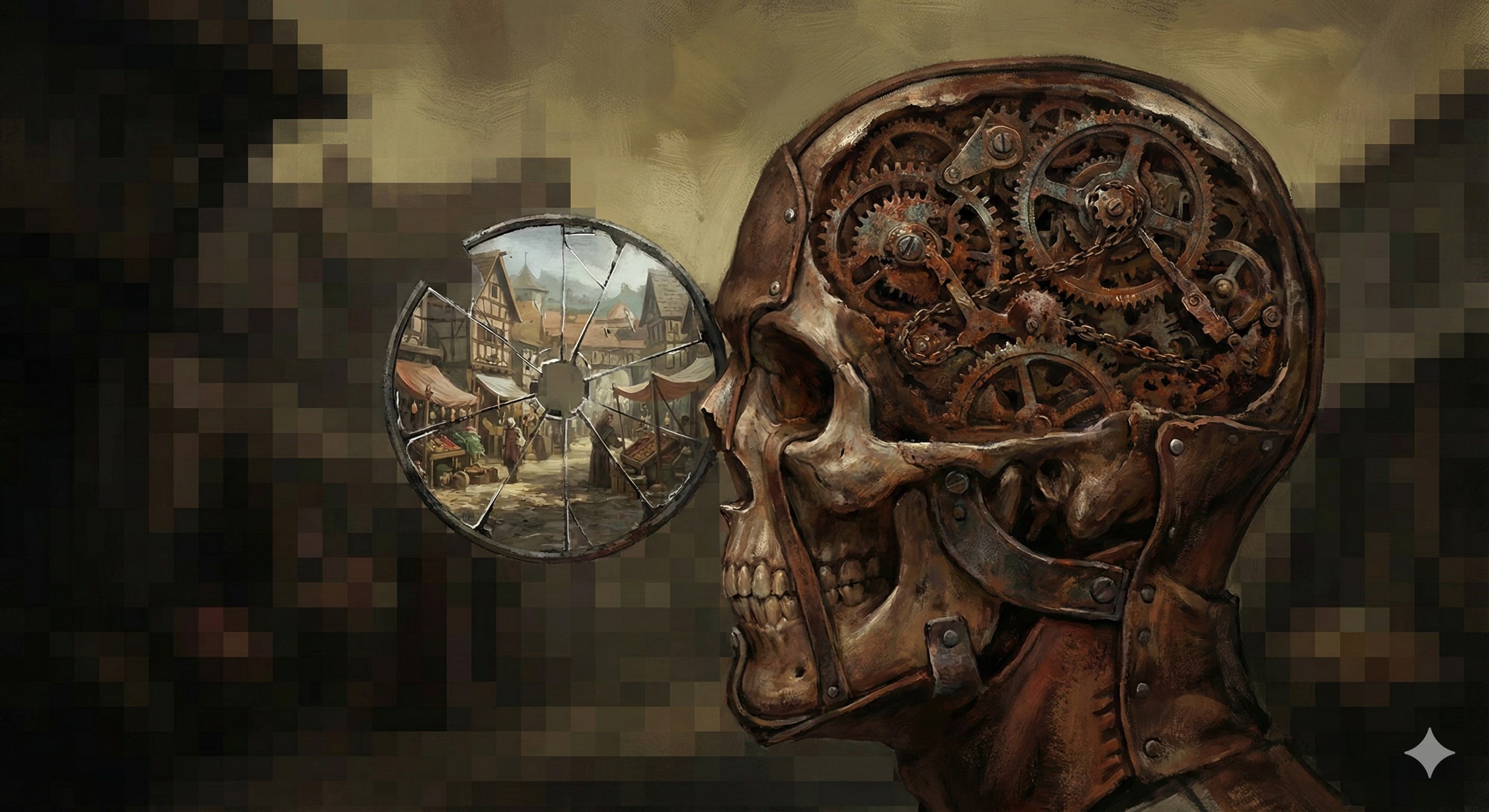
Blindness to the Web
To understand this horror, we must recall the Ethics of Unfolding. This is the principle that life is a networked web where every being has an inherent drive to develop its potential without being blocked by others. For people back then, the “morally relevant web of life” ended at their own front door or, at best, at the city walls. Everything lying outside—animals, criminals, heretics, people of different skin colors—was not perceived as part of the system. They were treated as mere objects.
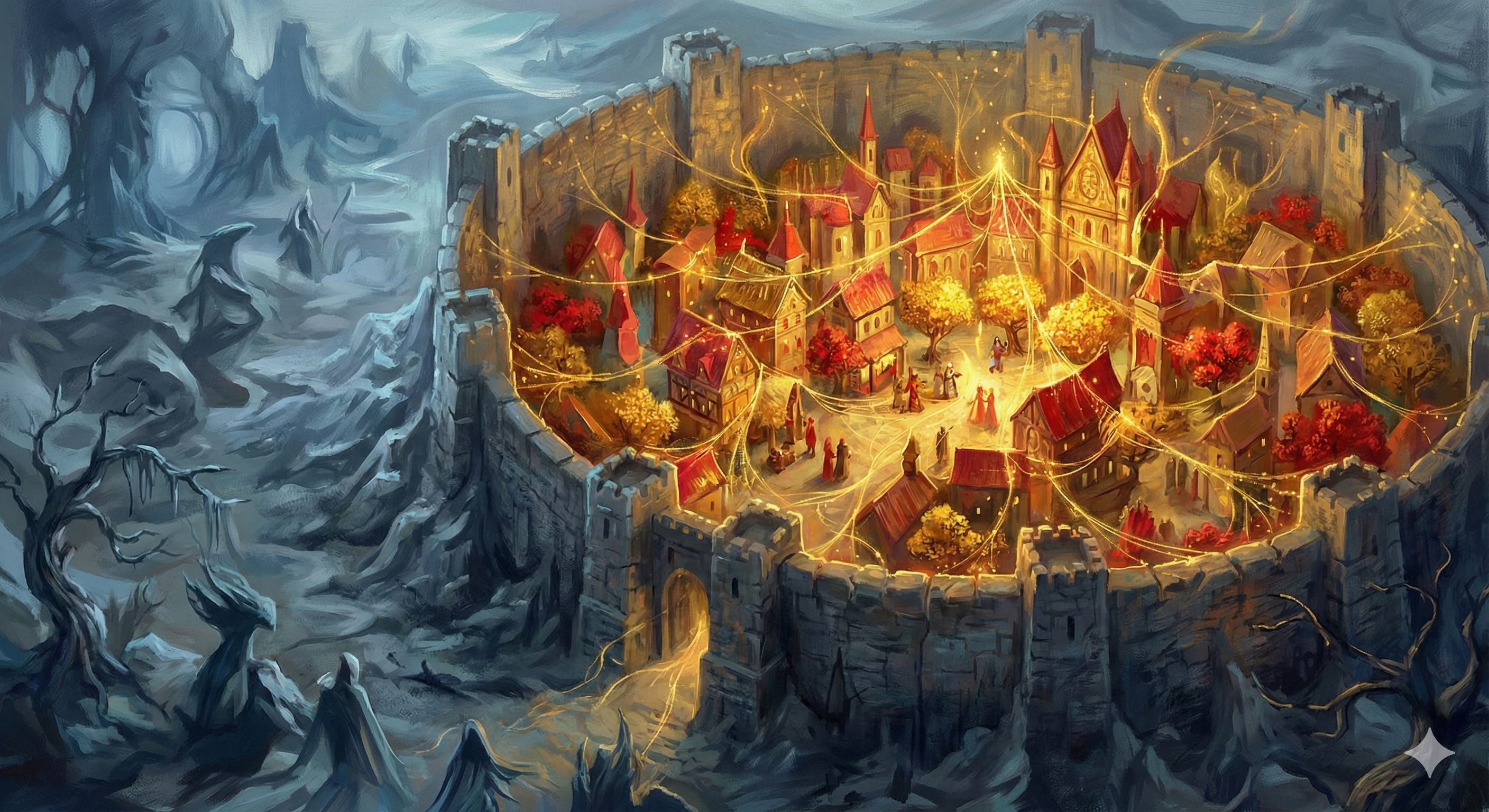
In the eyes of the public, these beings had no claim to unfolding. Their suffering was not a moral fact—an objective truth that demands a response—but merely irrelevant background noise, a kind of moral static. Human cruelty was not limited to animals. Public executions—the breaking wheel or the quartering of humans—were effectively the “Netflix of the Middle Ages”. Suffering served as entertainment because the Circle of Empathy was drawn extremely tight.
The philosopher Michel Foucault describes this in his book Discipline and Punish, using the example of the regicide Damiens in 1757. Before a curious crowd, his flesh was torn with red-hot pincers, and molten lead and boiling oil were poured into the wounds. Finally, four horses were harnessed to his limbs to tear him apart while he was still alive. The audience watched with fascination, enjoying the spectacle.
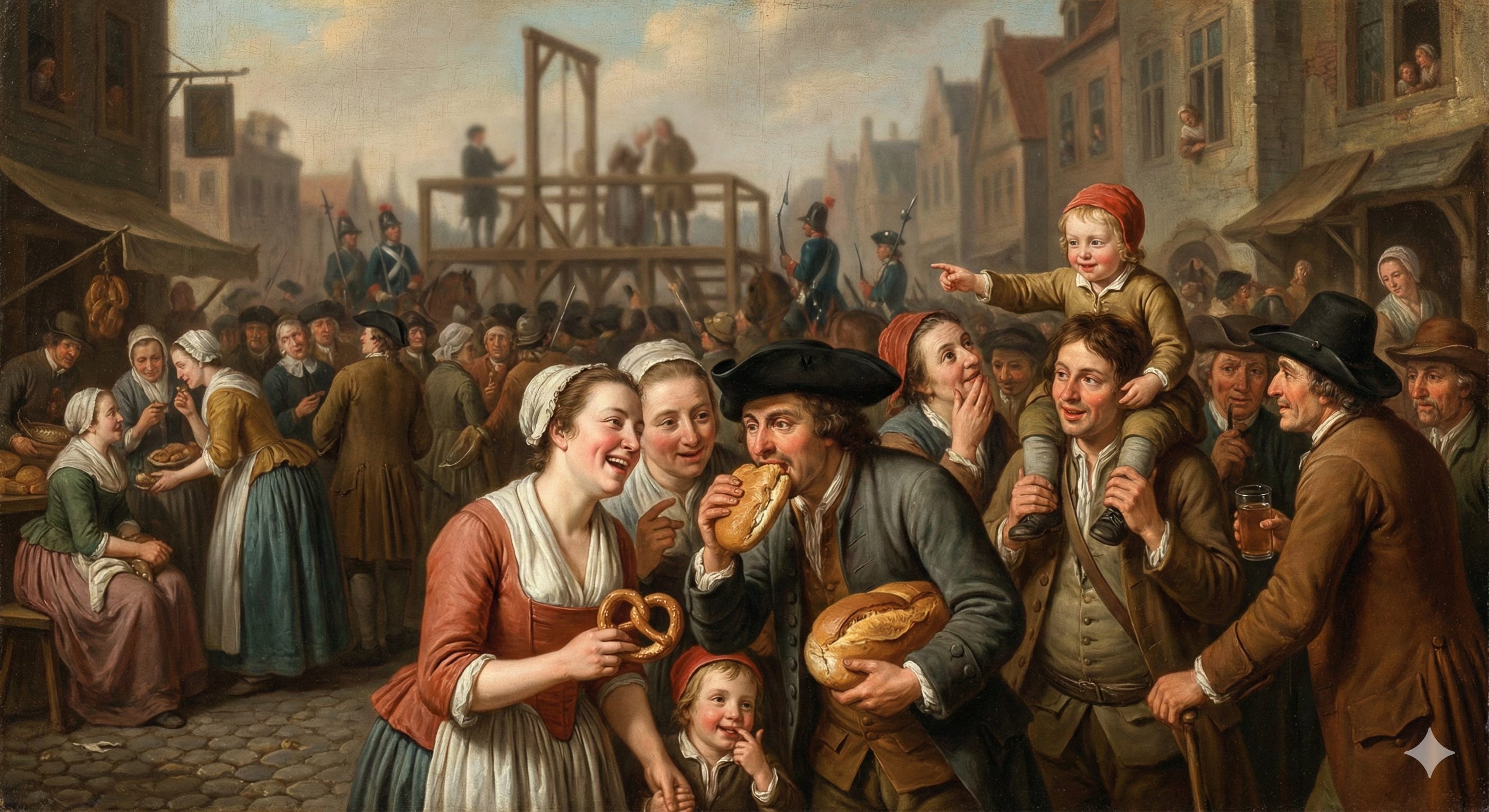
This laughter and wonder were symptoms of a massive moral myopia. The onlookers did not see that torturing a sentient being creates a tear in the fabric of existence, nor did they understand that every life strives to avoid pain and to unfold itself.
The Invention of Compassion
But then, something happened that Steven Pinker calls the “Humanitarian Revolution”. Within a few centuries, this public delight in cruelty almost completely disappeared from the Western world. What was it that shifted the Overton Window—the range of ideas and behaviors that society accepts as “normal” or “reasonable”—so massively that burning cats turned from a festival into a crime?
One decisive factor was a gigantic, societal “Moral Dry Run”: the spread of reading. A Moral Dry Run is a courageous mental practice where we actively simulate new perspectives to break through our “epistemic blockades”—the thought filters that make us blind to reality.
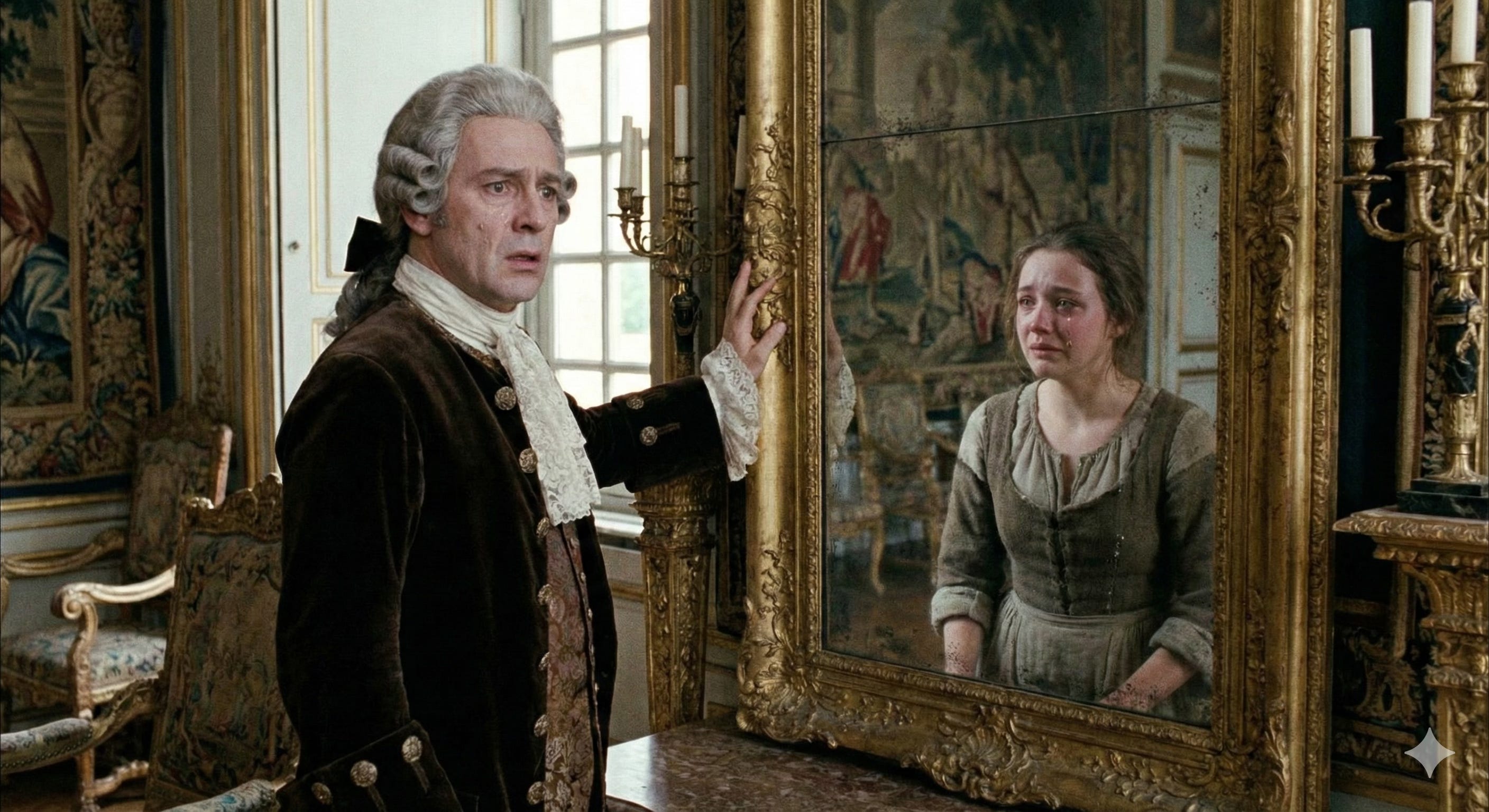
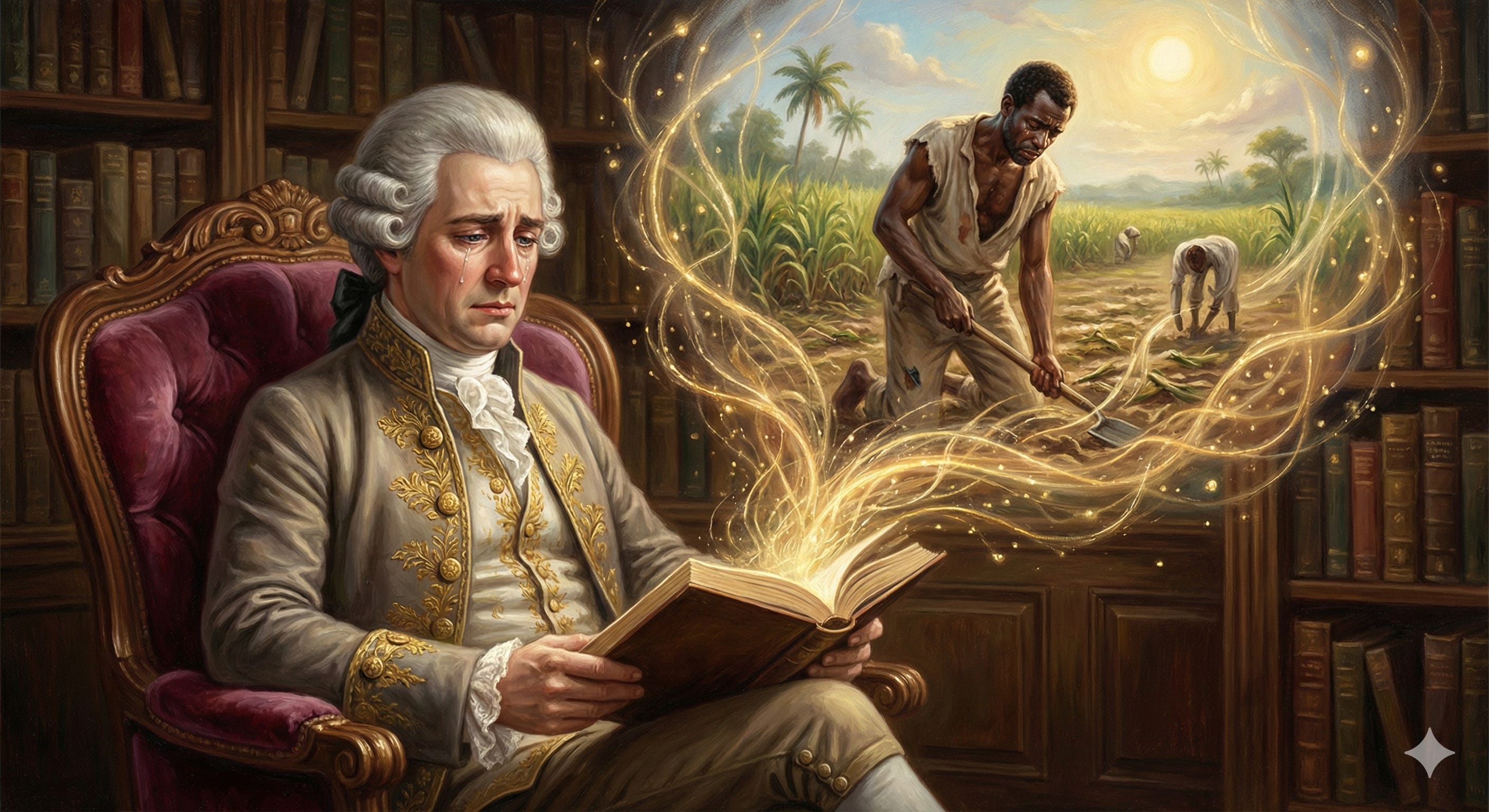
In the 18th century, people began to read novels en masse. Literature is, in essence, an empathy machine. It forces us to see the world through the eyes of another and simulates interconnectedness across boundaries. Suddenly, a Parisian aristocrat would step into the mind of a simple servant girl while reading. A wealthy Englishman would suddenly feel for a slave on a cotton plantation. The more we read, the harder it became to see the “other” as a mere object. We realized: “He feels like I do. He strives for happiness like I do”. The Circle of Empathy began to expand rapidly.
The First Stage of the Ecological Imperative
This brings us to the Ecological Imperative: Act in a way that minimizes the extent to which you hinder the unfolding of other life forms. The decline of physical violence was a particularly important step in this direction. Violence is the ultimate blockage of unfolding; a body being tortured cannot flourish, and a life extinguished loses all potentiality.
The fact that we now internationally outlaw torture, have animal welfare laws, and ban corporal punishment in education are all victories for moral intelligence. We have recognized the necessity of reducing our “footprint of suffering”—the measurable impact our choices have on the pain of others—as a moral fact. Suffering is objectively bad, no matter who experiences it.

Why This Gives Hope
Why is this retrospective important for us in the year 2026? Because it proves that human societies are not static. We are capable of learning. We have evolved from beings who laughed at burning cats to beings who write animal rights into constitutions. We have largely broken through our epistemic blockades regarding physical cruelty.
This does not mean the world is free of violence today, but the moral baseline has shifted. What was once entertainment is today a scandal. The Overton Window regarding violence has moved a great deal. And if we could learn to feel the pain of an animal or a stranger, then we can also take the next steps.
In the next article, we will look back once more at a struggle that was perhaps even greater than the outlawing of cruelty. While giving up sadistic entertainment cost nothing, our next topic was about money—a lot of money. We will examine how humanity learned that you cannot own people, and how morality ultimately triumphed over economics.